


Your Gut Has a Direct Line to Your Brain's Panic Button: Here's How to Stop It From Ringing Off the Hook!

Let's talk about the most underrated hormonal axis in your body: the HPA axis. It doesn't trend on wellness TikTok the way cortisol "belly fat" content does, but it is quite literally the command center deciding whether you sleep like a rock or stare at your ceiling at 3 am, whether your gut lining holds together or springs leaks, and whether your mood feels stable or like a browser with 47 tabs open. Once you understand it, a lot of "why do I feel like this" questions start answering themselves.
And once you understand the science behind two specific probiotic strains, Bifidobacterium longum 1714 and Bifidobacterium longum 35624, the exact duo found in Gut-Brain Reset by Microbiome Labs, it stops sounding like supplement marketing and starts sounding like an elegant piece of physiology.
Meet the HPA Axis: Your Body's Stress Relay Team
HPA stands for Hypothalamic-Pituitary-Adrenal, which sounds like a law firm but is a three-organ relay race that runs every time your brain perceives a threat, real or imagined, tiger-in-the-bushes or unread Slack messages.
Here's the play-by-play. Your hypothalamus, sitting deep in your brain, senses stress and releases corticotropin-releasing hormone (CRH). CRH travels a short distance to your pituitary gland and tells it to release adrenocorticotropic hormone (ACTH). ACTH then travels through your bloodstream down to your adrenal glands, which sit on top of your kidneys, and tells them to release cortisol, your body's primary stress hormone.
In short bursts, this is a beautifully designed survival system. Cortisol mobilizes glucose, sharpens focus, and gets you through the emergency. Then, ideally, cortisol feeds back to the hypothalamus and pituitary and says, "we're good now," shutting the whole cascade back down. This is called negative feedback, and it's the off switch that keeps the system healthy.
The problem is modern life rarely lets that off-switch flip. Chronic stress in the form of work deadlines, poor sleep, inflammation, a crying infant at 2am, keeps the HPA axis humming continuously. Over time, this negative feedback loop gets dysregulated, cortisol stays elevated (or eventually blunted and erratic), and that dysregulation doesn't stay contained to your brain. It reaches all the way down into your gut.
The Gut-Brain Axis: Where This Gets Interesting
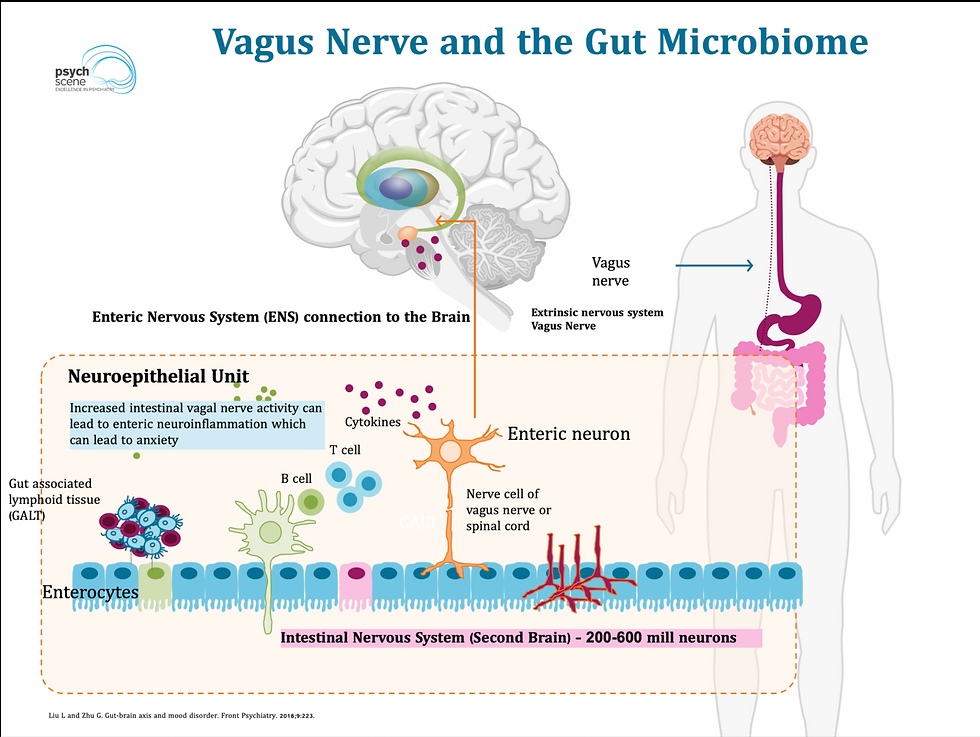
Your gut and brain are in constant two-way conversation through what scientists call the gut-brain axis, and the HPA axis is one of its main communication channels, alongside the vagus nerve (a literal nerve cable connecting your gut and brainstem) and a soup of immune signals and microbial metabolites.
Here's the part that should genuinely blow your mind: this conversation goes both directions! Stress from your brain can wreck your gut lining. And your gut microbes can talk back up the HPA axis and change how much cortisol gets released in the first place. Germ-free mice, animals raised with no gut microbiome at all, show an exaggerated, overblown HPA response to stress, releasing far more ACTH and corticosterone (the rodent version of cortisol) than mice with a normal microbiome. Translation: your gut bacteria are quite literally helping keep your stress response from redlining.
How Stress Actually Breaks Open Your Gut Lining
This is where "leaky gut", a term that gets thrown around loosely, but has real, mapped-out biology behind the concept of increased intestinal permeability, enters the picture.
Your intestinal lining is one cell layer thick, held together by structures called tight junctions: protein complexes (occludin, claudin, ZO-1) that act like the seals between paving stones, letting nutrients through in a controlled way while keeping bacteria, toxins, and undigested food particles out of your bloodstream.
When the HPA axis fires, here's the domino chain that follows, and it's faster and more direct than most people realize:
1. CRH doesn't just stay in your brain. Enteric neurons and immune cells in your gut wall also produce it locally.
2. That local CRH binds receptors on mast cells sitting right in your gut lining.
3. Mast cells degranulate , think of it as popping , releasing histamine, tryptase, and inflammatory cytokines like TNF-α and IL-6 directly onto your tight junctions.
4. Meanwhile, stress also triggers zonulin, a protein researcher Alessio Fasano discovered acts as the master "gatekeeper" of tight junctions. Zonulin binds receptors on your gut cells and triggers an internal contraction that physically yanks the tight junction proteins apart.
5. The gates swing open , this is measurable within minutes to hours in stress studies , and bacterial fragments like LPS (lipopolysaccharide), undigested proteins, and microbial byproducts start slipping into your bloodstream where they don't belong.
6. Your immune system reacts to this unwelcome traffic with inflammation, which travels back up to your brain and re-triggers the HPA axis, keeping cortisol elevated.
That last step is the kicker: it's a feedback loop, not a one-way street. Stress opens the gut, the leaky gut generates inflammation, and inflammation keeps stress hormones elevated, which keeps the gut leaky. Round and round it spins.
Why Your Sleep Takes the Hit Too
Cortisol is supposed to follow a clean daily rhythm, high in the morning to help you wake up, tapering down through the day, and hitting its lowest point at night so melatonin can do its job. A dysregulated HPA axis flattens or scrambles that curve. You get "tired but wired" at bedtime, middle-of-the-night waking, and non-restorative sleep, which then feeds back into the HPA axis the next day because sleep deprivation is itself a potent HPA activator. It's the same loop wearing a different hat.
Enter the Probiotics: B. longum 1714 and B. longum 35624
This is where Gut-Brain Reset's specific pairing gets scientifically satisfying, because these two Bifidobacterium longum strains are not interchangeable, they've each been studied for distinct, complementary jobs along this exact stress-gut-brain circuit, and "probiotics are strain-specific" isn't a marketing line, it's a documented reality in the research (a related bifidobacteria mouse study found the antidepressant-like and anti-stress effects were specific to certain strains and absent in others tested side by side).
B. longum 1714: The HPA Axis Volume Knob
B. longum 1714 has one of the more elegant human evidence bases in the psychobiotic space. In a placebo-controlled crossover trial out of University College Cork, healthy adults took either the strain or a placebo, then underwent a socially evaluated cold pressor test, a standardized stress challenge (hand in ice water, judged performance, the works).
The results:
· Cortisol output during the acute stressor was significantly attenuated compared to placebo.
· Self-reported anxiety in response to the stressor dropped; the spike that normally follows a stress test was blunted.
· Daily reported stress over the 4-week intervention was measurably lower.
· EEG recordings showed enhanced frontal midline activity, a signature associated with cognitive control, and subtle improvements in hippocampus-dependent visuospatial memory showed up too.
A separate magnetoencephalography (MEG) study literally watched B. longum 1714 change resting brain activity patterns during a social stress paradigm; this strain is doing something to neural circuitry, not just gut chemistry.
Then there's the sleep data: a randomized, double-blind, placebo-controlled trial specifically in adults with impaired sleep found B. longum 1714 improved sleep quality and reduced daytime dysfunction from sleepiness after 4 weeks, with continued gains in energy and social functioning by week 8.
Mechanistically, it's not just quieting cortisol from the top down; it's also working on inflammation directly, inducing the anti-inflammatory cytokine IL-10 while suppressing TNF-α and IL-1β, and increasing plasma tryptophan and kynurenic acid (precursors your body uses for neurotransmitter and immune signaling). Given that inflammatory cytokines are one of the main things re-triggering the HPA axis in that feedback loop above, damping them down is a genuinely useful lever to pull.
B. longum 35624: The Barrier Bodyguard
If 1714 is turning down the volume on the stress response itself, B. longum 35624 (also studied under its former name B. infantis 35624, and the active strain in Align) is doing more of the ground-floor repair work on the gut barrier and immune tone.
The strain's defining feature is a surface exopolysaccharide (a sugary coating, abbreviated EPS624) that engages dendritic cells and Toll-like receptor 2 in a way that steers the immune response toward tolerance rather than inflammation. In controlled trials across healthy volunteers, psoriasis patients, ulcerative colitis patients, and chronic fatigue syndrome patients, 8 weeks of B. longum 35624:
· Significantly increased plasma IL-10 (anti-inflammatory) across multiple patient groups.
· Significantly reduced plasma TNF-α and IL-6 (pro-inflammatory) in every group tested.
· Reduced CRP, a systemic inflammation marker, in psoriasis, ulcerative colitis, and chronic fatigue patients.
That same EPS coating has been shown to dampen pro-inflammatory TH17 responses and induce regulatory T cells (Tregs) , the immune system's "stand down" signal, and it directly binds inflamed colonic mucosa, physically countering the barrier dysfunction that shows up in conditions like IBS. Separately, B. longum as a species (including this strain) has been shown to upregulate the actual tight junction proteins, ZO-1, occludin, and claudin-1, that stress and zonulin are trying to pull apart, via TLR2-dependent signaling.
35624 also has real clinical mileage on the gut-brain side of the ledger specifically: RCTs in IBS patients found it reduced abdominal pain, bloating, and bowel irregularity, with the mechanism traced to normalizing a skewed IL-10/IL-12 cytokine ratio and modulating intestinal dendritic cells, and it's shown benefit in children and adolescents with IBS-type symptoms too.
Why Pairing Them Makes Mechanistic Sense
Put these two together, and you get a strain combination that's covering both ends of the loop we mapped out earlier: 1714 turns down the HPA axis's stress signal and the cortisol/anxiety response at the top, while 35624 reinforces the tight junction barrier and calms local gut inflammation at the bottom, cutting off the loop at two points instead of one. This isn't handwaving; it's consistent with the broader literature on Bifidobacterium/Lactobacillus combinations, in which studies have shown that combined strains regulate glucocorticoid negative feedback on the HPA axis more effectively than either strain alone, specifically by improving the sensitivity of the cortisol feedback loop. And in a study specifically in women with IBS, the 1714 + 35624 combination together improved anxiety, depression, and sleep quality alongside a measurable drop in TNF-α , same story, both ends of the axis moving in the right direction simultaneously.
The Bottom Line
The HPA axis isn't just a "stress hormone thing"; it's a bidirectional highway between your brain and your gut lining, and chronic activation of it is a well-documented, mechanistically mapped way to loosen the tight junctions holding your intestinal barrier together, which in turn keeps feeding inflammation back up to your brain. Strain-specific probiotics like B. longum 1714 and B. longum 35624 aren't a vague "gut health" gesture; they target two distinct, complementary nodes in that exact circuit, with actual randomized, placebo-controlled human data on cortisol output, sleep quality, inflammatory cytokines, and gut barrier integrity. Luckily, you can find these strains in one product called Gut-Brain Reset by Microbiome Labs, and we carry it in the office!
None of this means a capsule replaces sleep hygiene, stress management, or a decent diet; the HPA axis responds to all of it. But if you're going to reach for a microbial assist, it's genuinely satisfying, as a scientist, to see the mechanism line up with the marketing for once.
Ciao,
Melody
This post is for educational purposes and reflects current published research. It is not medical advice; talk to your healthcare provider about what's right for your individual situation, especially if you're pregnant, breastfeeding, or managing a diagnosed condition.
References
Ait-Belgnaoui, A., Payard, I., Rolland, C., Harkat, C., Braniste, V., Théodorou, V., & Tompkins, T. A. (2018). Bifidobacterium longum and Lactobacillus helveticus synergistically suppress stress-related visceral hypersensitivity through hypothalamic-pituitary-adrenal axis modulation. Journal of Neurogastroenterology and Motility, 24(1), 138–146. https://doi.org/10.5056/jnm16167
Aleman, R. S., Moncada, M., & Aryana, K. J. (2023). Leaky gut and the ingredients that help treat it: A review. Molecules, 28(2), 619. https://doi.org/10.3390/molecules28020619
Allen, A. P., Hutch, W., Borre, Y. E., Kennedy, P. J., Temko, A., Boylan, G., Murphy, E., Cryan, J. F., Dinan, T. G., & Clarke, G. (2016). Bifidobacterium longum 1714 as a translational psychobiotic: Modulation of stress, electrophysiology and neurocognition in healthy volunteers. Translational Psychiatry, 6(11), e939. https://doi.org/10.1038/tp.2016.191
Bertollo, A. G., Santos, C. F., Bagatini, M. D., & Ignácio, Z. M. (2025). Hypothalamus-pituitary-adrenal and gut-brain axes in biological interaction pathway of the depression. Frontiers in Neuroscience, 19. https://doi.org/10.3389/fnins.2025.1541075
BiomeGuide. (n.d.). B. longum: Gut-brain axis probiotic. Retrieved August 18, 2026, from https://biomeguide.com/microbiome/bifidobacterium-longum/
Breit, S., Kupferberg, A., Rogler, G., & Hasler, G. (2018). Vagus nerve as modulator of the brain–gut axis in psychiatric and inflammatory disorders. Frontiers in Psychiatry, 9, Article 44. https://doi.org/10.3389/fpsyt.2018.00044
Carabotti, M., Scirocco, A., Maselli, M. A., & Severi, C. (2015). The gut-brain axis: Interactions between enteric microbiota, central and enteric nervous systems. Annals of Gastroenterology, 28(2), 203–209.
Clarke, G., Cryan, J. F., & Dinan, T. G. (2015). Bifidobacterium longum 1714: A psychobiotic that modulates brain activity, the stress response and neurocognitive performance in healthy volunteers [Conference poster/PDF]. University College Cork. https://www.ucc.ie/en/media/academic/psychiatry/Allen_NeuroIreland_2015_BifLongum.pdf
Fasano, A. (2012). Zonulin, regulation of tight junctions, and autoimmune diseases. Annals of the New York Academy of Sciences, 1258(1), 25–33. https://doi.org/10.1111/j.1749-6632.2012.06538.x
Fasano, A. (2016). Zonulin, a regulator of epithelial and endothelial barrier functions, and its involvement in chronic inflammatory diseases. Tissue Barriers. https://doi.org/10.1080/21688370.2016.1251384
GutCode. (n.d.-a). Intestinal permeability and leaky gut: Zonulin, tight junctions, claudin/occludin biology, LPS translocation and systemic inflammation. Retrieved August 18, 2026, from https://gutcode.vercel.app/intestinal-permeability-leaky-gut-zonulin-tight-junction-claudin-occludin-lps-translocation-dysbiosis-guide
GutCode. (n.d.-b). Leaky gut syndrome: Tight junctions, zonulin & evidence-based repair protocol. Retrieved August 18, 2026, from https://gutcode.vercel.app/leaky-gut-intestinal-permeability-zonulin-tight-junction-repair-guide
Groeger, D., Yao, L., Collins, F., Larsen, I. S., Tan, H.-T. T., Healy, S., Ambrogi, V., Tykwinska, K., Schmidt, M., Golletz, P., Kiely, B., Clarke, G., Dinan, T. G., Murphy, E. F., & O’Mahony, L. (2025). Complementary immunoregulatory effects of Bifidobacterium longum 1714™ associated exopolysaccharide and tryptophan metabolism. Current Research in Microbial Sciences, 9, Article 100481. https://doi.org/10.1016/j.crmicr.2025.100481
Han, Y., Wang, B., Gao, H., He, C., Hua, R., Liang, C., Zhang, S., Wang, Y., Xin, S., & Xu, J. (2022). Vagus nerve and underlying impact on the gut microbiota-brain axis in behavior and neurodegenerative diseases. Journal of Inflammation Research, 15, 6213–6230. https://doi.org/10.2147/JIR.S384949
InnerStandin. (n.d.). How chronic stress compromises the gut: The HPA-gut-barrier link. Retrieved August 18, 2026, from https://innerstandin.co.uk/article/chronic-stress-gut-barrier-link
Lenoir, M., Wienke, J., Fardao-Beyler, F., & Roese, N. (2023). An 8-week course of Bifidobacterium longum 35624® is associated with a reduction in the symptoms of irritable bowel syndrome. Probiotics and Antimicrobial Proteins, 17(1), 315–327. https://doi.org/10.1007/s12602-023-10151-w
MyHealthcare. (n.d.). Gut-brain axis, stress, and intestinal permeability. Retrieved August 18, 2026, from https://myhealthcare.com/Remedies/Gut_Brain_Axis/Benefits/Stress-and-Intestinal-Permeability.html
Muñoz, S. C., Palma, S. V., Marqués, L. L., Pizarro, M. N. E., Mechasqui, J. M., & Sorensen, K. (2024). Effects of Bifidobacterium longum 35624 in children and adolescents with irritable bowel syndrome. Nutrients, 16(12), Article 1967. https://doi.org/10.3390/nu16121967
Optmzd. (n.d.). Best probiotic strains for IBS: Not all probiotics are the same. Retrieved August 18, 2026, from https://www.optmzd.app/blog/best-probiotic-strains-for-ibs
Patterson, E., Tan, H. T. T., Groeger, D., Andrews, M., Buckley, M., Murphy, E. F., & Groeger, J. A. (2024). Bifidobacterium longum 1714 improves sleep quality and aspects of well-being in healthy adults: A randomized, double-blind, placebo-controlled clinical trial. Scientific Reports, 14, 3725. https://doi.org/10.1038/s41598-024-53810-w
Peh, D. (2026). Bifidobacterium infantis 35624 (Bifidobacterium longum subsp. infantis 35624): Benefits, dosage, side effects & evidence. NutriDex. Retrieved July 14, 2026, from https://nutridex.info/s/b-infantis-35624
Quigley, E., Groeger, D., O’Mahony, L., Bourke, J., Scully, P., Dinan, T., Shanahan, F., & Kiely, B. (2011). Oral administration of the probiotic Bifidobacterium infantis 35624 reduces inflammatory biomarkers [Abstract]. American Journal of Gastroenterology, 106, S463–S464.
Rusch, J. A., Layden, B. T., & Dugas, L. R. (2023). Signalling cognition: The gut microbiota and hypothalamic-pituitary-adrenal axis. Frontiers in Endocrinology, 14, Article 1130689. https://doi.org/10.3389/fendo.2023.1130689
Savignac, H. M., Kiely, B., Dinan, T. G., & Cryan, J. F. (2014). Bifidobacteria exert strain-specific effects on stress-related behavior and physiology in BALB/c mice. Neurogastroenterology & Motility. https://doi.org/10.1111/nmo.12427
Schiavi, E., Gleinser, M., Molloy, E., Groeger, D., Frei, R., Ferstl, R., Rodriguez-Perez, N., Ziegler, M., Grant, R., Moriarty, T. F., Plattner, S., Healy, S., Akdis, C. A., Akdis, M., Roper, J., O’Mahony, L., & O’Neill, L. A. J. (2016). The surface-associated exopolysaccharide of Bifidobacterium longum 35624 plays an essential role in dampening host proinflammatory responses and repressing local TH17 responses. Applied and Environmental Microbiology, 82(24). https://doi.org/10.1128/aem.02238-16
SIBO Guru. (n.d.). Unlocking the link between stress hormones and leaky gut: What you need to know. Retrieved August 18, 2026, from https://siboguru.com/unlocking-the-link-between-stress-hormones-and-leaky-gut-what-you-need-to-know/
Sultana, R., McBain, A. J., & O’Neill, C. A. (2013). Strain-dependent augmentation of tight-junction barrier function in human primary epidermal keratinocytes by Lactobacillus and Bifidobacterium lysates. Applied and Environmental Microbiology, 79(16), 4887–4894. https://doi.org/10.1128/AEM.00982-13
Wang, H., Braun, C., Murphy, E. F., & Enck, P. (2019). Bifidobacterium longum 1714™ strain modulates brain activity of healthy volunteers during social stress. American Journal of Gastroenterology, 114(7), 1152–1162. https://doi.org/10.14309/ajg.0000000000000203
Note: The Nature Scientific Reports (2024) and PMC10866977 entries above (Patterson et al.) refer to the same study — listed once. Several sources (myhealthcare.com, InnerStandin, GutCode ×2, biomeguide.com, Optmzd) are non-journal educational webpages with no named author or publication date; I’ve cited them as organizational/website sources per APA guidance for undated web content.

Comments